
Verified
Sorrento, Italy
Sorrento Coast Sightseeing Shared Boat Tour
New
2 hours
From
€70
Free Cancellation
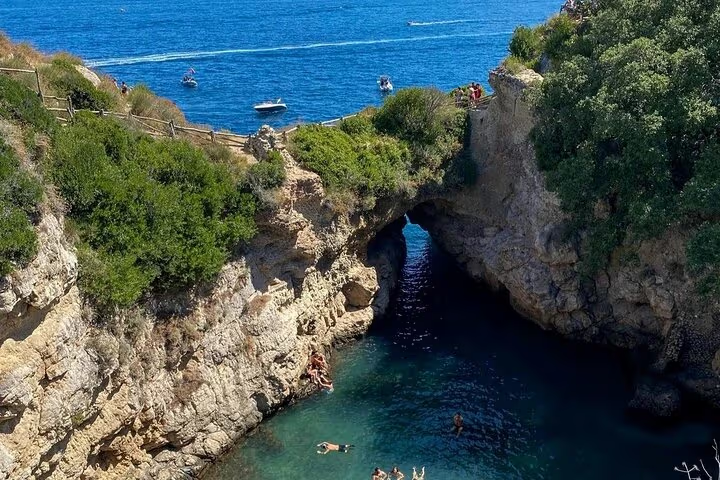
Sorrento Sustainable Travel offers a serene coastal escape, where ancient lemon groves meet the azure Tyrrhenian Sea, inviting visitors to engage.
Overview
Sorrento Sustainable Travel offers a chance to experience the captivating allure of Italy's Amalfi Coast with a conscience. Perched dramatically on cliffs overlooking the Bay of Naples, the town is famed for its fragrant lemon groves and the lively Piazza Tasso. Visitors can enjoy traditional Limoncello while embracing responsible tourism practices. This guide explores how to enjoy Sorrento's charm, from its historic center to its local culinary scene, with a focus on respectful and low-impact exploration.
Perched on cliffs overlooking the Bay of Naples, Sorrento offers visitors a unique blend of vibrant citrus groves, historic charm, and spectacular views across to Mount Vesuvius and the island of Capri. It serves as an ideal base for exploring the Campania region, balancing relaxed coastal living with easy access to ancient ruins and dramatic coastlines. Embracing Sorrento Sustainable Travel means appreciating its local culture, supporting artisan traditions, and preserving its natural beauty for future generations. This guide explores how to experience Sorrento authentically and responsibly.
Sorrento's appeal lies in its distinct character as a gateway town, combining a lively atmosphere with periods of tranquility. The heart of the town beats around Piazza Tasso, a central square where locals and visitors converge, framed by historic buildings and outdoor cafes. From here, visitors can explore the narrow, winding alleys of the historic center, Via San Cesareo, renowned for its artisanal shops selling intricate marquetry, local limoncello, and handcrafted leather goods. The town's cliffside position provides constant visual drama, with viewing points offering expansive vistas of the deep blue Tyrrhenian Sea. Sorrento tours provide an excellent way to discover both its popular attractions and lesser-known corners with expert local guidance.
Beyond the central squares, the ancient fishing village of Marina Grande offers a charming contrast, with its colorful houses, traditional wooden fishing boats, and waterfront restaurants serving fresh seafood. This area, less formal than the main town, retains a genuine local feel, ideal for an evening stroll or a leisurely meal by the water. Further up, the Romanesque Sorrento Cathedral (Duomo di Sorrento) stands as a testament to the town's enduring history, featuring a bell tower and beautiful internal frescoes. Sorrento's strategic location also positions it perfectly for day trips to Pompeii, Herculaneum, and the stunning Amalfi Coast, making it a comprehensive destination for cultural exploration and scenic beauty.
For travelers keen on responsible tourism, Sorrento presents numerous opportunities to engage with its culture respectfully. Prioritizing Sorrento Sustainable Travel involves choosing locally-owned accommodations, dining at restaurants that source ingredients from nearby farms, and utilizing public transport options like the Circumvesuviana train line for trips to Naples or Pompeii, rather than always relying on private vehicles. Supporting the local economy directly benefits residents and helps maintain the town’s unique identity against the pressures of mass tourism. Seek out the Mercato Ortofrutticolo di Sorrento, the local fruit and vegetable market, to purchase fresh produce, support local farmers, and experience a slice of daily life.
Sustainable practices extend to respecting the natural environment, particularly the delicate coastal ecosystems and the iconic lemon groves that define the Sorrento landscape. Visitors are encouraged to minimize waste, conserve water, and adhere to designated paths when exploring the area's many scenic trails. Learning a few basic Italian phrases can also enhance interactions with locals, fostering a deeper connection and appreciation for their way of life. For more detailed information on visiting the region sustainably and exploring its rich history, the official Italia.it tourism website provides comprehensive resources and guides for ethical travel across the country.
This guide will delve further into Sorrento's distinct neighborhoods, culinary delights, and practical travel tips, all with a focus on responsible exploration. Prepare to discover the authentic charm of this cliffside Italian jewel, ensuring your visit contributes positively to its enduring legacy.
When to Visit
The ideal time to visit Sorrento for a balanced experience is late spring (April-May) or early autumn (September-October). In spring, temperatures average 18-25°C, with blooming citrus groves and moderate crowds, allowing for comfortable exploration before peak season prices hit. Early autumn offers equally pleasant weather, around 20-28°C, and the sea is still warm for swimming, with tourist numbers beginning to subside from the summer peak. While June-August is popular, it's significantly hotter, more crowded, and most expensive. Winter (November-March) is quiet, but some seasonal services close. For a first-time visitor, April-May offers the best combination of pleasant weather, vibrant scenery, and manageable crowds.
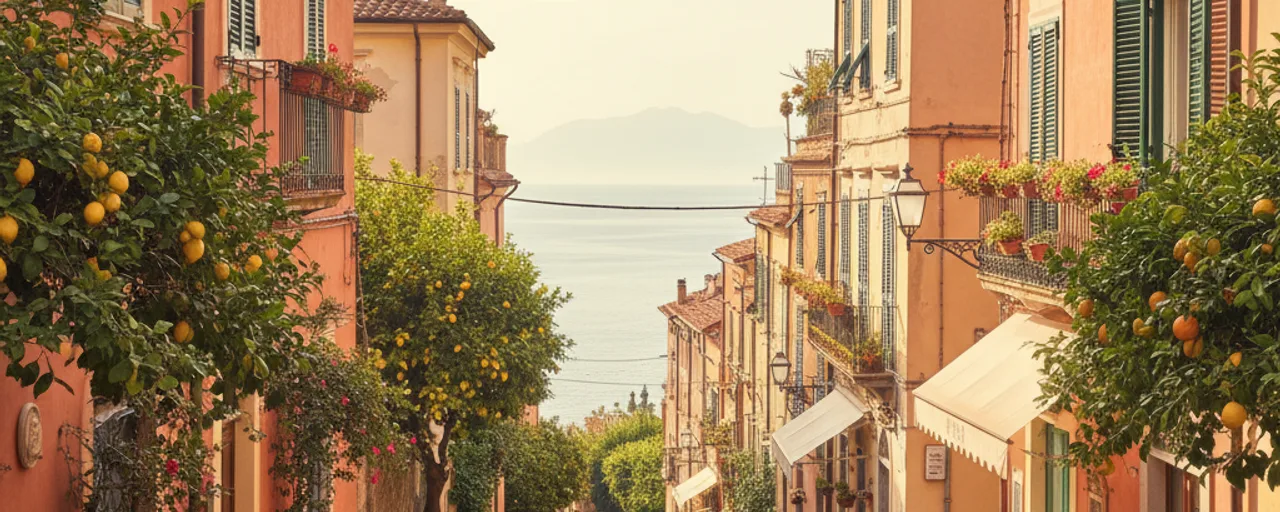
An idyllic, sun-drenched street in Sorrento, Italy, showcases a picturesque scene. Terracotta-colored buildings with green shutters and flower-filled balconies frame the path, leading to a serene Mediterranean Sea vista and distant mountains. Perfect for exploring Sorrento's authentic charm.
Sorrento enjoys a Mediterranean climate with warm, dry summers and mild, wetter winters. Spring (March-May) offers pleasant temperatures, typically 10-20°C, with abundant sunshine and blossoming citrus groves, ideal for exploring. Summers (June-August) are hot and dry, averaging 25-35°C, with July and August being the warmest and busiest months. Autumn (September-November) brings a return to comfortable conditions, 15-25°C, often with warm sea temperatures extending into October. Winters (December-February) are mild but wetter, ranging from 5-15°C, with fewer tourists and some seasonal closures. The best times to visit for comfortable weather and lighter crowds are late spring (April-May) and early autumn (September-October).
Getting Around
Sorrento’s compact size makes walking an excellent, completely eco-friendly way to navigate the town center and enjoy its coastal views. For regional travel, the Circumvesuviana train line is a highly sustainable option (Eco-friendly rating: High), connecting Sorrento to Naples, Pompeii, and Herculaneum, with a single journey to Naples costing around €4.90. To explore the Amalfi Coast, SITA Sud buses provide routes to Positano and Amalfi; tickets vary by distance but generally cost €1.30-€5.00, offering a moderately eco-friendly choice (Eco-friendly rating: Medium). Within Sorrento, local EAV buses service areas like Marina Grande and Marina Piccola for similar local fares. Ferries and hydrofoils depart from Marina Piccola, linking Sorrento to islands such as Capri and Ischia, with single fares starting from approximately €15 (Eco-friendly rating: Medium).
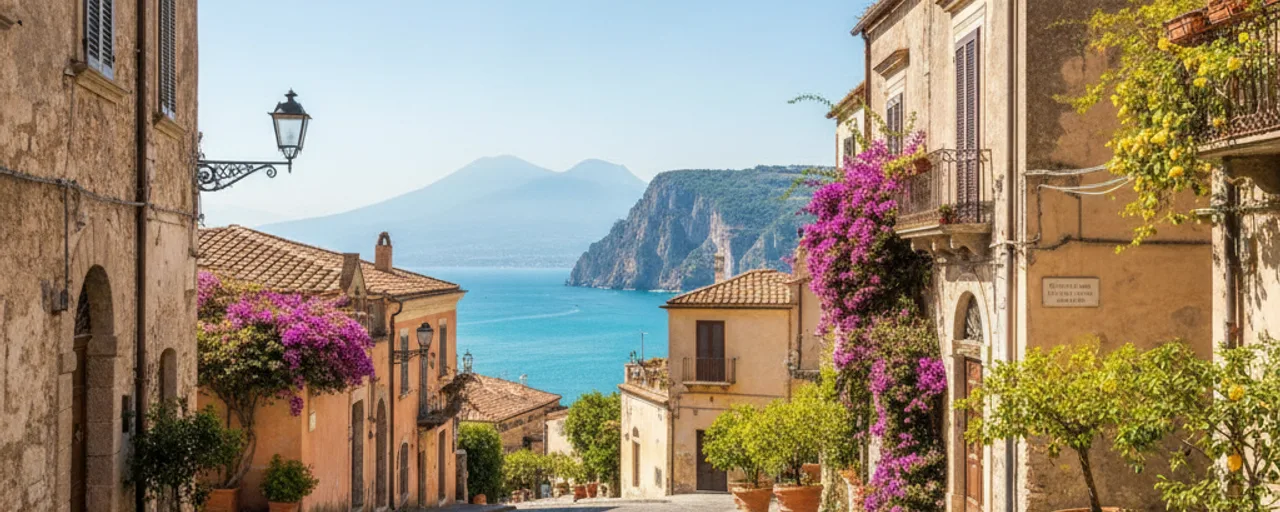
A charming street in Sorrento, Italy, bathed in sunlight. Historic buildings feature colorful purple bougainvillea and quaint balconies. The street opens to a stunning view of the turquoise Bay of Naples, dramatic cliffs, and distant mountains, embodying Mediterranean beauty and sustainable travel charm.
Eco Travel
Embracing Sorrento sustainable travel means valuing its exquisite natural beauty and supporting its vibrant community. Opt for walking its charming streets or utilize the reliable Circumvesuviana train to explore nearby Pompeii and Naples, significantly reducing your carbon footprint. Prioritize local, seasonal produce from markets like the daily one on Via San Renato, and choose family-run trattorias over large chains. Support artisans crafting Limoncello or intarsio woodworks, ensuring your tourism spend benefits the local economy directly. Yovu encourages booking experiences with verified local operators committed to ethical practices, from boat tours minimizing marine impact to accommodations championing energy efficiency. Dispose of waste responsibly and respect local etiquette to preserve Sorrento's allure for future generations.
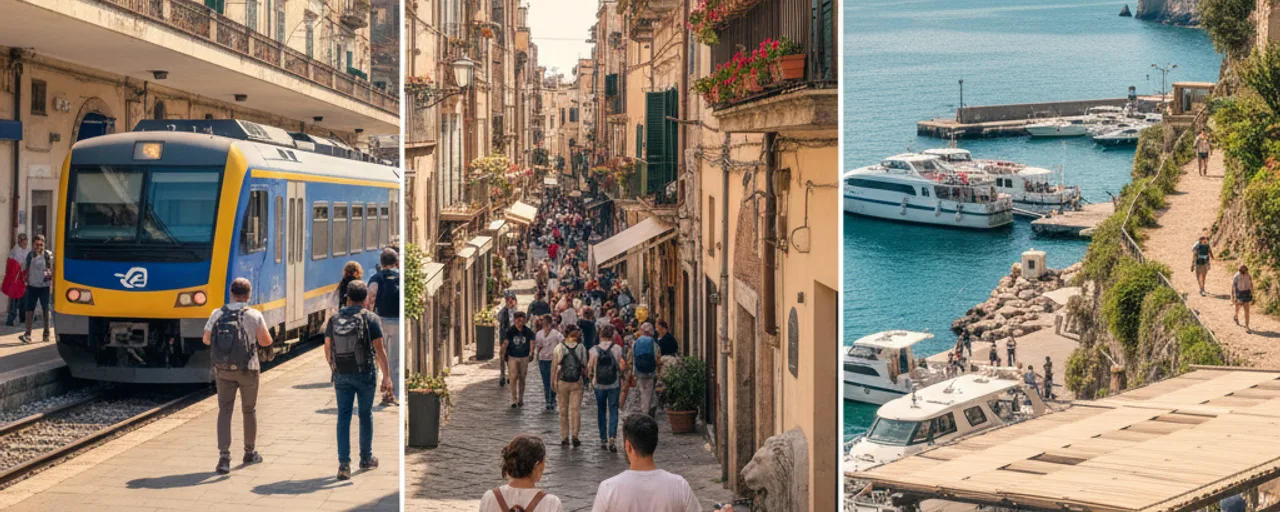
Experience the diverse beauty of Sorrento on a sunny day. From arriving at the train station to exploring a bustling historic shopping street and walking a scenic coastal path overlooking yachts in the harbor.
Use the Circumvesuviana train for day trips to Pompeii or Naples, reducing car emissions.
Walk Sorrento's historic centre and nearby areas, or opt for local SITA buses to explore Massa Lubrense and other coastal towns.
Choose hydrofoil or ferry services for trips to Capri, Ischia, or the Amalfi Coast, minimizing the environmental impact of private boat tours.
Support local agriculture by buying Limoncello directly from small farms or fresh produce at Sorrento's daily market on Via San Renato.
Dine at trattorias that highlight "A miglio zero" (zero-mile) ingredients, showcasing the fresh, seasonal produce of the Campania region.
Carry a reusable water bottle and refill it at your accommodation or public fountains to reduce plastic waste.
Explore the scenic walking paths like the Sentiero degli Dei in the nearby Lattari Mountains, appreciating nature respectfully.
Traveling to Sorrento, like any journey, carries a carbon footprint, with flights contributing significantly. For example, a round-trip from London typically emits around 0.2-0.3 tons of CO2e per passenger, while a flight from New York might be 1.0-1.5 tons. To mitigate this, consider offsetting your emissions through certified programs that invest in renewable energy or reforestation projects. Yovu prioritizes connecting travelers with local, low-impact Sorrento Sustainable Travel operators and advises on greener transport options, helping you reduce your footprint even before considering offsets.
Learn more about our green initiativesCulture
Sorrento's vibrant culture is deeply woven into its daily rhythms and traditions. A beloved local custom is the *passeggiata*, the evening stroll, particularly evident along Corso Italia or overlooking the Bay of Naples. Locals dress in their finest to socialize and enjoy the balmy air before dinner, a truly authentic experience to observe. Reverence for tradition is also clear during religious celebrations, such as the Festa di Sant'Antonino Abate on February 14th, honoring Sorrento's patron saint with processions and community events. When dining, remember that Italian meals are cherished, unhurried social affairs. Furthermore, a quick espresso is typically enjoyed standing at the bar rather than as a lengthy sit-down experience, reflecting the dynamic pace of local life.

Sunny Sorrento morning. Charming pastel buildings with green shutters and tiled roofs frame the clear blue Bay of Naples, dotted with sailboats. Majestic Mount Vesuvius looms in the distance, capturing Sorrento's iconic Mediterranean charm.
Food & Drink
Sorrento's culinary landscape is deeply rooted in the fertile Campania soil and the Tyrrhenian Sea. The region's lemons are famously central to its cuisine, celebrated in dishes like *Delizia al Limone*, a light sponge cake with lemon cream, commonly found in pastry shops along Corso Italia. Don't miss *Gnocchi alla Sorrentina*, soft potato dumplings baked in a rich tomato sauce with mozzarella and basil, a staple in traditional trattorias throughout the town. Of course, *Limoncello*, the vibrant lemon liqueur, is a must-try; visit artisanal producers on Via San Cesareo for tastings. Fresh seafood, caught daily, also features prominently, served simply grilled at restaurants overlooking Marina Grande. Eating here is a celebration of fresh, local ingredients.
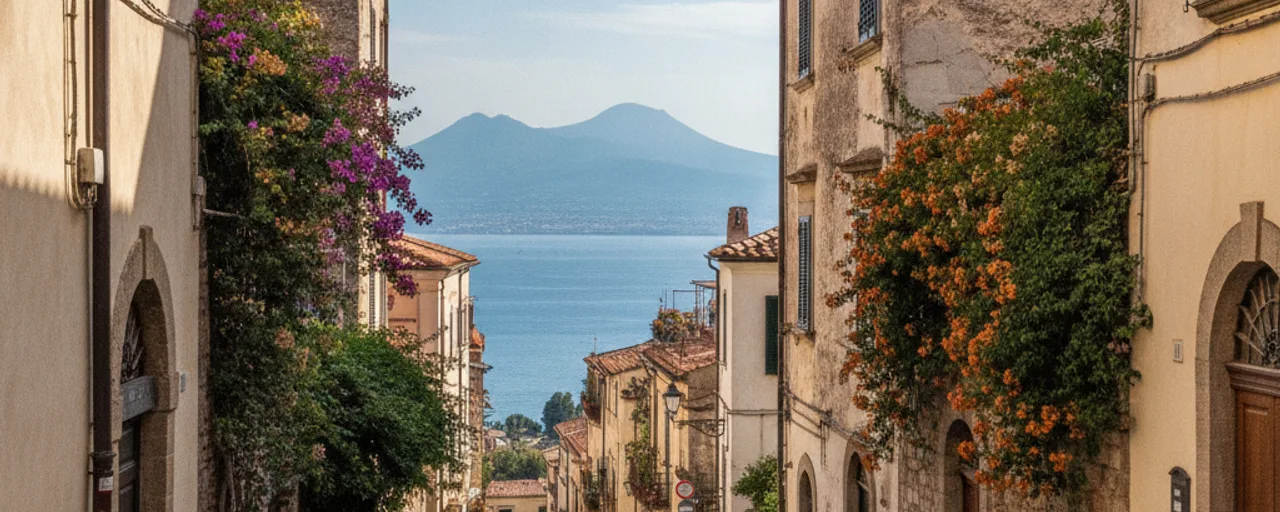
A charming Sorrento street descends, revealing the sparkling Bay of Naples and distant Mount Vesuvius. Historic buildings are draped in vibrant purple and orange bougainvillea, an idyllic Mediterranean scene.
Essentials
For citizens of the European Union, a valid national ID card or passport is sufficient for entry into Italy, with no visa required. US and UK citizens can typically enter Italy for tourism purposes without a visa for stays up to 90 days within any 180-day period. A passport valid for at least three months beyond the planned departure date is generally required. While these are common guidelines, specific requirements can vary. Travelers should always verify the latest visa regulations and entry conditions with their respective national embassy or consulate for Italy before planning their Sorrento sustainable travel.
Tap water in Sorrento is generally safe to drink directly from the tap; however, bottled water is widely available if preferred. Routine vaccinations for travel in Europe are recommended. Be aware of common minor scams, such as inflated prices at very touristy spots or opportunistic pickpocketing in crowded areas like Piazza Tasso or Circumvesuviana train stations. Keep valuables secure and avoid unsolicited "guides." For any emergencies, dial 112, the pan-European emergency number, which connects to police, ambulance, or fire services.
Police
112
Ambulance
112
Fire
112
Embassy: Check your home country's embassy website for local contacts in Italy, generally based in Rome.
Sustainable tours with verified local operators. Small groups, real impact.